Monday, July 31, 2006
SAVE RIGHT TO INFORMATION ACT 2005.....
Dear Friends, We have just read and signed the online petition: "Save Right to Information Act 2005" hosted on the web by PetitionOnline.com, the free online petition service
Click Here To Sign
We personally agree with what this petition says, and we think you might agree, too. If you can spare a moment, please take a look, and considersigning yourself.

Tuesday, July 25, 2006
ACCEPTANCE SPEECH : FR CEDRIC PRAKASH
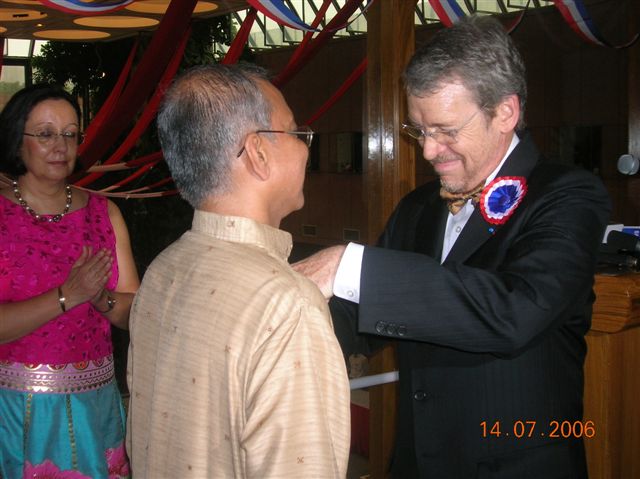
Acceptance SPEECH OF FR. CEDRIC PRAKASH sj on being conferred the CHEVALIER DE LA LEGION DE HONNEUR Award by Monsieur Dominique Girard, Ambassador of France to India.
Embassy of France, New Delhi, July 14th 2006
Your Excellency Monsieur Dominique Girard, Ambassador of France to India, Madame Girard, Dignitaries, Co-Activists, Jesuit Companions and Friends,
I am simply overwhelmed……!
When I was first given the news that the “ Chevalier de la Legion d’ Honneur ” was being conferred on me by the President and Government of France, I was dumbfounded and even today, as I receive it, I feel very humbled. I certainly know, that I am not deserving of it; at the same time, I do accept this honour with great joy, because for me, it is a recognition not merely of my tiny efforts but of the fact that several others are involved in the cause of human rights in a very collaborative way; it is a recognition of the reality that human rights violations do abound in India and other parts of the world; it is above all, a recognition of the hundreds and thousands of people who silently suffer from all kinds of injustices and human rights violations, of every possible kind.
In accepting this award, I sincerely believe that it will be another ray of hope for those who yearn to have their place in a more humane, just and peaceful society.
My heart is full today and there is so much I would like to express…..
At the outset, I would like to thank Monsieur Jacques Chirac, the President of the French Republic for conferring this prestigious honour on me. I am deeply grateful to him, to his Government and to the people of France for appreciating our efforts in India. In particular, “ MERCI BEAUCOUP ”to you, Your Excellency, for recognizing what we stand for. This ceremony would not have been possible were it not for the fact that as Ambassador of France your singular goal has been to promote those cherished ideals which France gave the world, namely, “ liberte, egalite et fraternite ”. These very ideals are enshrined in our Indian Constitutions. Thank you for reminding us, that as people of a great democracy, we all need to do our very best to promote and safeguard these sacred values.
I am proud to be a Jesuit. Today, several of my Jesuit Companions are present here. These include the President of the Jesuit Conference of South Asia - Fr. Hector D’Souza, my own Jesuit Provincial Superior - Fr Keith Abranches and two of my ex-Provincials, Archbishop Stanny Fernandes (now also the Secretary General of the Catholic Bishops Conference of India) and Bishop Godfrey de Rozario. Together with them, I want to celebrate the memory of our three Founding Fathers : Ignatius of Loyola, Francis Xavier and Pierre Favre, who in fact, began their journey together from a college room (referred to as “the Paradise”) in Sainte-Barbe College in Paris. This year, is a Triple-Jubilee Year for us Jesuits, as we observe the Fifth Centenary of the birth of Francis Xavier and Pierre Favre, and the 450th death anniversary of Ignatius Loyola.
I am happy that the birth of the Society actually took place in France and that on the 15th August 1534 (the feast of The Assumption), seven men with seven different names but with identical ideals, gathered together in the remote Chapel Crypt of St. Denis at Montmartre and pronounced their First Vows in the Society. I need to be saying all this because that commitment that was made years ago in France, has been part of the faith-justice mandate of the Society of Jesus the world over, today. Yes, there is the “French Connection” with the Jesuits. I am delighted about that !
There are several other co-activist friends who are present today. Many of you have shaped my vision and commitment. Today is a day which calls for a renewal and deepening of this commitment. We have just witnessed horrible incidents of terror in Mumbai / Srinagar. We cannot remain mute spectators; our response has to be one of deeper commitment.
I am glad that so many of you are here today. I wish there were many more. I wish this ceremony could have been in Ahmedabad. I want to remember in a particular way those groups who mean a lot to me but who are not represented here this evening. I remember in particular, the victims of the Gujarat Carnage of 2002….there are so many of them who still wait (perhaps hopelessly) for justice and a new dawn; I remember each of my colleagues who work with me in PRASHANT, not a single one of them is here today, but without them, I know I would not have been standing here. I also remember my immediate family, specially my aged mother, who would have loved to be here this evening but for obvious reasons, cannot make it….to all of them : my sincere gratitude.
Last Sunday evening, in Pakistan, with a group of football enthusiasts, I sat down to watch the World Cup Football Finals. I didn’t have to tell anyone which team I was rooting for. Well, it had nothing to do with the fact of this award, but since 1998, Zinedine Zidane has always been my favourite football player and before the start of the match, I highlighted to my co-viewers, what a great example the French Team is, in terms of being multi-racial and multi-religious. Watching the team go out to play, was for me, a very emotional moment. A clear indicator of what our world has to be. Only if and when we defend the rights of every section of society – very specially the weak, the marginalized, the minorities - only then, we can truly move towards a world social order which is more just and more humane.
I dedicate this honour
· to the memory of my dear friend Eshan Jafri who was so brutally murdered on March 1st, 2002, inspite of having all the right possible connections, inspite of being a very well known secular face, inspite of being a
former Member of Parliament !
· to his wife Zakhiaben and to his children Nishrin, Zuber and Tanvir who struggle for justice for the victims
of Gulbarg Society and others in Gujarat so that the death of Eshan Sahib will not go in vain
· to the several other victims : faceless, nameless….of the Gujarat Carnage, who as I said earlier, are desperately looking for a new dawn and finally,
· to several of my co-activists , who inspite of having to face all obstacles, continue to fight for human rights, justice and peace.
It was Mahatma Gandhi, who from the banks of the river Sabarmati, launched his twin doctrine of “Ahimsa” (non-violence) and “Satyagraha” (the force of truth). We have indeed paid too little attention to these fundamentals of life. Yes, this honour reminds me that there is still so much to be done …… that we all have to be doing. Let our poet laureate, Rabindranath Tagore remind us of our responsibility as we pray with those immortal words from his Gitanjali:
Where the mind is without fear and the head is held high,
Where knowledge is free,
Where the world has not been broken up into fragments by narrow domestic walls,
Where words come out from the depth of truth,
Where tireless striving stretches its arms towards perfection,
Where the clear stream of reason has not lost its way into the dreary desert sands of dead habit,
Where the mind is led forward by thee into ever widening thought and action,
Into that haven of freedom, my Father, led my country awake !
Yes, let us all awake !
Merci Beaucoup ! Thank you very much ! Vive la France ! Jai Hind !
Monday, July 24, 2006
SPEECH : AMBASSADOR OF FRANCE
Speech given by His Excellency, Mr. Dominique Girard, the Ambassador of France,on the occasion of the “Chevalier de la Légion d’Honneur” Award conferred on Father Cedric Prakash at the French Embassy in New Delhi on 14th July 2006
It is my great pleasure to confer upon Father Cedric Prakash the award of the “Knight of the Legion of Honour”/“Chevalier de la Légion d’Honneur” in order to acknowledge his courageous work for the defence of Human Rights for over 30 years now.
Father, several times in your younger days, in India as well as in Northern Ireland, you have been witnessing different communities confronting each other and these scenes of violence have left a deep mark on you. But instead of complaining about it passively, you chose to fight against this phenomenon with all the energy of a man of goodwill and all the conviction of a man of faith.
In 1987, you took over the reins of St. Xavier’s Social Service Society and steered it for more than fourteen years. During this time, you made it one of the most highly-rated NGOs in Gujarat by its constant involvement in the slums of Ahmedabad and the rural areas of this State through the four inter-related approaches of education, health, organization and environment. As early as this time, you revealed your deep concern for communal harmony by creating “Shanti”, (or “Peace” in Hindi), an initiative to promote peace and justice among different communities.
You left the St. Xavier’ Social Service Society in 2001, but only because you had by then founded “Prashant” (which means “peaceful” in Sanskrit), a well-named Centre for Human Rights, Justice and Peace which, in only 5 years, has become a Centre of international standing.
The remarkable and courageous work done by “Prashant” after the tragic communal riots of 2002 in Gujarat must be stressed here. You and your Centre really did much to contain the communal conflagration which threatened to spread even further. To those who have been hurt, you open your heart full of compassion, leading them to turn anger into patience, desires of revenge into quest for justice, violence into peaceful feelings. And after 4 years your Centre is still animated by the same spirit of truth.
But talking about “Prashant”, mentioning only its work in the aftermaths of the 2002 massacres, would be unfair and incomplete. Most of “Prashant’s” actions are a daily endeavour in the midst of people of different religious communities to dissolve the boundaries raised by sectarianisms of all kind. At a time when some voices loudly proclaim as “inescapable” the so called “clash of civilisations”, you prove in concrete terms that “dialogue” and “tolerance” are not empty words, but real values which, more than ever, are worth fighting for.
You, a Jesuit Priest of the Roman Catholic Church, are working with Muslims and Hindus as well as with Christians because human beings and not religions are your first and only concern. Against resignation you bring hope, against hate you raise tolerance, and through your Centre you help to bring awareness among people of different faiths, because you know that the strongest ally of sectarianism is ignorance.
Your social commitment is of course rooted in your own faith. But the vision of “Prashant” is also enshrined in the preamble of the Universal Declaration of the Human Rights which has its origin in the “Declaration of the Rights of Man and Citizen”/“Declaration des Droits de l’Homme et du Citoyen” that France adopted in 1789 as the foundation of its emerging Republican Constitution. The dignity of human beings and the defence of their inalienable rights are the values that my country proudly shares with yourself.
Father, you have been generous with your time, with your courage and with your faith, and on behalf of the President of the French Republic, I’m very honoured to decorate you today with the most prestigious French award of “Chevalier de la Légion d’Honneur”.
Note on the award of the Legion of Honour and Agricultural Merit
LEGION D'HONNEUR - FRENCH LEGION OF HONOUR
MERITE AGRICOLE- AGRICULTURAL MERIT
MERITE AGRICOLE- AGRICULTURAL MERIT
The highest French distinction
Created to reward eminent military and civil merits in the service of France, the "Légion d'Honneur" (Legion of Honour) is the highest distinction that can be conferred in France on a French citizen as well as on a foreigner.
Origin
Founded in 1802 by Napoléon Bonaparte, First Consul (a position he occupied from 1799 to 1804), the Legion of Honour is one of his most important creations with the Napoleonic Code.
Grades and Ranks
This distinction is divided into four grades (Knight - Officer – Commander-Grand Officer)
Description of the insignia
Since its inception, the medal consists of a five double-cornered star enamelled in white, joined with branches of laurel and oak.
At the centre of the star, there is a medallion representing
- in the front side, the symbol of the Republic with the inscription "République Française"
- on the other side, a flag and a banner intertwining one another with the circular inscription "Honneur et Patrie - 29 Floréal an X"
- in the front side, the symbol of the Republic with the inscription "République Française"
- on the other side, a flag and a banner intertwining one another with the circular inscription "Honneur et Patrie - 29 Floréal an X"
The ribbon has always been in red moire silk.
Some Famous historical personnalities awarded
BERTHOLLET (chemist), BALZAC, STENDHAL, VICTOR HUGO, CHATEAUBRIAND, THEOPHILE GAUTIER, ALFRED DE MUSSET, ALEXANDRE DUMAS (novelists and poets), LAPLACE (mathematician), MONTGOLFIER (physician), BERLIOZ (musician), CUVIER, LAMARCK (naturalists), DAVID, INGRES, DELACROIX (painters)
BERTHOLLET (chemist), BALZAC, STENDHAL, VICTOR HUGO, CHATEAUBRIAND, THEOPHILE GAUTIER, ALFRED DE MUSSET, ALEXANDRE DUMAS (novelists and poets), LAPLACE (mathematician), MONTGOLFIER (physician), BERLIOZ (musician), CUVIER, LAMARCK (naturalists), DAVID, INGRES, DELACROIX (painters)
In India, the renowned film director SATYAJIT RAY, singer LATA MANGESHKAR , industrialist DEEPAK BANKER, musician RAVI SHANKAR, columnist DILIP PADGAONKAR and scientist CNR RAO are some of the famous Indian personalities who have been bestowed this honour.
MERITE AGRICOLE
The Mérite Agricole (Agricultural Merit) was created in 1883 to reward " persons who have rendered outstanding service in the field of 'agriculture". It comprises of three grades: knight, officer (since 1887) and commander (since 1900).
The Mérite Agricole (Agricultural Merit) was created in 1883 to reward " persons who have rendered outstanding service in the field of 'agriculture". It comprises of three grades: knight, officer (since 1887) and commander (since 1900).
Saturday, July 08, 2006
NEW HUMAN RIGHTS
For many years WACC has supported the communication rights movement and, in particular, the strengthening and implementation of rights for indigenous people. WACC's members worldwide will be greatly encouraged by this positive and constructive move by the UN Human Rights Council and fully endorses both the new Convention and Declaration.
INTERNATIONAL CHRISTIAN BODIES WELCOME ADOPTION OF NEW HUMAN RIGHTS
STANDARDS
International church and ecumenical organizations have welcomed the adoption of a new International Convention on the Protection of All Persons from Enforced Disappearance, and a Declaration on the Rights of Indigenous Peoples, both of which were agreed at the inaugural session of the UN Human Rights Council which concluded in Geneva on 30 June 2006. Five church-related organizations - the World Council of Churches (WCC), the Lutheran World Federation (LWF), Franciscans International, Dominicans for Justice and Peace and Pax Christi International - had earlier submitted a joint statement to the UN Council urging the adoption of these
measures, and have been at the forefront of civil society advocacy on these issues in recent years.
"The adoption of this convention confirms a positive development in international law towards the rights of victims to truth, justice and reparation," stated Dr Guillermo Kerber, the WCC programme executive responsible for human rights and impunity issues. "It also signals that the newly-formed UN Human Rights Council is able to act decisively in support of the fundamental dignity and rights of people, and to confront impunity, and this is to be applauded."
The church-related organizations also noted that non-governmental organizations enjoyed a high degree of access to the discussions in the context of the Council's first session, and they welcomed this transparency. "We very much hope that this openness to civil society, and the interactive nature of this session, are signs of how the Human Rights Council will conduct itself in the future," said Mr Peter N. Prove assistant to the LWF general secretary for international affairs and human rights, who also paid tribute to the "skilful stewardship" of the
presidency of the first session.
"It is hoped that this Convention will go a long way in eliminating impunity and bringing peace to the families of the disappeared," said Etienne De Jonghe, secretary general of Pax Christi International. The convention recognizes the "extreme seriousness of enforced disappearance,which constitutes a crime and, in certain circumstances defined in international law, a crime against humanity" and holds states
accountable for taking effective measures to prevent such disappearances.
Likewise, the Declaration on the Rights of Indigenous Peoples affirms unequivocally that "indigenous peoples have the right to the full enjoyment, as a collective or as individuals, of all human rights and fundamental freedoms," and holds states responsible for realizing this. In their joint statement to the UN Council, the WCC, the LWF, Franciscans International, Dominicans for Justice and Peace, and Pax Christi International committed themselves to working with the new Human Rights Council "as a key international instrument for the promotion of justice and human dignity". The five organizations also underscored that the Council will be judged by whether it "actually increases the chances for life in dignity and in sustainable communities for people suffering discrimination, deprivation, oppression and violence."
Thursday, June 29, 2006
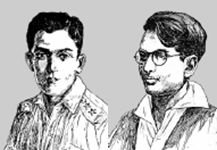
60 years of Martyrdom of Vasant & Rajab
DATE : 29th June 2006
PRESS STATEMENT
DATE : 29th June 2006
PRESS STATEMENT
The 60 years of Martyrdom of Vasant & Rajab
* ONE YEAR PROGRAMME FROM 30th JUNE 2006
* CALENDAR AND BOOK TO BE RELEASED
* DEMAND FOR POSTAGE STAMP
* SUGGESTION TO INTRODUCE A CHAPTER IN SCHOOL SYLLABUS
The 60 years of Martyrdom of Vasant-Rajab will be completed on Saturday, 1st July 2006. These two youngsters had sacrificed their lives during the communal riots in Ahmedabad in 1946. To commemorate the 60th year of Martyrdom of Vasant - Rajab, various programmes will be organized in the State through the year by : Movement for Secular Deocracy, Akhil Bhartiya Sevadal, Gujarat Sarvoday Mandal, AWAG, PRASHANT, Janpath, Pragatisheel Lekhak Sangh, Cultural Educational Forum, Gandhi Peace Foundation and others.
Programmes :
30th June 2006
A Seminar " Reimagining the City, Reimagining the Nation " will be organized by ANHAD at the CC Mehta Auditorium, MS University, Vadodara from 9.30 am. to 5.30 pm. Thereafter, “A cultural Tribute to Vasant-Rajab - An Evening of Dance, Poetry and Music” will be held from 7.30 pm. onwards. Dhruv Sangari, Gauhar Raza, Khalil Dhantejvi, Saba Azad Grewal and Mehneer Sudan will be the artistes performing at this cultural event.
1st July 2006 - Morning
On Saturday, 1st July 2006, a Vasant-Rajab Calendar will be released by Sevadal, in the presence of Shri Brahmakumar Bhatt and Shri Prakash N. Shah at Sardar Congress Bhavan, Bhadra, Ahmedabad, at 9.00 am. and then, a rally will be taken out to Vasant-Rajab Memorial Chowk, Khand-ni-Sheri, Jamalpur, to join the Tribute Programme.
Afternoon - Release of Book on Vasant-Rajab
On Saturday, 1st July 2006, evening, at 5.00 o'clock, a programme jointly organized by various organizations will be held in Upasana Khand, Gujarat Vidyapeeth. The programme will be presided over by the Gujarat Vidyapeeth KulNayak, Shri Sudarshan Iyengar. A book written by Shri Prakash N. Shah on Vasant-Rajab, depicting their lives and time, will be released. The first copy will be presented to families of Vasant and Rajab.
Songs and speeches paying rich tribute to Vasant-Rajab will be presented.
Programmes outside Ahmedabad
Mehmadabad :
On Saturday, 1st July 2006, the organizers of Vasant-Rajab Academy will meet and chalk out the year-long programmes at Mehmadabad, Kheda District.
Vadodara :
On Sunday, 2nd July, under the auspices of Movement for Secular Democracy, PUCL and others, a Memorial Meeting will be held in the evening at 5.00 o'clock at Bhailal Amin Hall in Vadodara. The Meeting will be presided by Shri Manubhai Patel - President, Akhil Hind Sevadal and Ex-Member of Parliament. Shri Prakash N. Shah, Editor "Nireekshak" will address the meeting.
Centenary Year :
In the coming months, various programmes will be organized in Surat and Bhavnagar.
This is the birth centenary year of Vasant Rao Hegishte, and to commemorate this occasion, various programmes will be organized in Ahmedabad.
Prof. Abid Shamsi is translating the Vasant-Rajab book into English. A Hindi translation will also be done.
Demand for Postage Stamp :
Apart from all these programmes, in a letter to the Central Ministry of Communication and Information Technology, Shri Dayanidhi Maran, the Movement for Secular Democracy has requested that a special postal stamp in memory of Vasant-Rajab be brought out. It has also requested the Gujarat State Education Department to include a chapter on Vasant-Rajab in the syllabus of the School Textbooks.
Essay Competition :
An Essay Competition on communal problems and national unity will be organized in a few days, for students and citizens and the best essays will be rewarded on 10th December 2006, International Human Rights Day.
Issued by
Movement for Secular Democracy (M.S.D.)
C/o. Narmad Meghani Library, Opp. Natraj Railway Crossing, Mithakhali, Ellisbridge, Ahmedabad-380006.
Ph.No. (079) 26404418
Supported by :
Akhil Bhartiya Sevadal, Gujarat Sarvoday Mandal, AWAG, PRASHANT, Janpath, Pragatisheel Lekhak Sangh, Cultural Educational Forum and Gandhi Peace Foundation
PRESS STATEMENT
DATE : 29th June 2006
PRESS STATEMENT
The 60 years of Martyrdom of Vasant & Rajab
* ONE YEAR PROGRAMME FROM 30th JUNE 2006
* CALENDAR AND BOOK TO BE RELEASED
* DEMAND FOR POSTAGE STAMP
* SUGGESTION TO INTRODUCE A CHAPTER IN SCHOOL SYLLABUS
The 60 years of Martyrdom of Vasant-Rajab will be completed on Saturday, 1st July 2006. These two youngsters had sacrificed their lives during the communal riots in Ahmedabad in 1946. To commemorate the 60th year of Martyrdom of Vasant - Rajab, various programmes will be organized in the State through the year by : Movement for Secular Deocracy, Akhil Bhartiya Sevadal, Gujarat Sarvoday Mandal, AWAG, PRASHANT, Janpath, Pragatisheel Lekhak Sangh, Cultural Educational Forum, Gandhi Peace Foundation and others.
Programmes :
30th June 2006
A Seminar " Reimagining the City, Reimagining the Nation " will be organized by ANHAD at the CC Mehta Auditorium, MS University, Vadodara from 9.30 am. to 5.30 pm. Thereafter, “A cultural Tribute to Vasant-Rajab - An Evening of Dance, Poetry and Music” will be held from 7.30 pm. onwards. Dhruv Sangari, Gauhar Raza, Khalil Dhantejvi, Saba Azad Grewal and Mehneer Sudan will be the artistes performing at this cultural event.
1st July 2006 - Morning
On Saturday, 1st July 2006, a Vasant-Rajab Calendar will be released by Sevadal, in the presence of Shri Brahmakumar Bhatt and Shri Prakash N. Shah at Sardar Congress Bhavan, Bhadra, Ahmedabad, at 9.00 am. and then, a rally will be taken out to Vasant-Rajab Memorial Chowk, Khand-ni-Sheri, Jamalpur, to join the Tribute Programme.
Afternoon - Release of Book on Vasant-Rajab
On Saturday, 1st July 2006, evening, at 5.00 o'clock, a programme jointly organized by various organizations will be held in Upasana Khand, Gujarat Vidyapeeth. The programme will be presided over by the Gujarat Vidyapeeth KulNayak, Shri Sudarshan Iyengar. A book written by Shri Prakash N. Shah on Vasant-Rajab, depicting their lives and time, will be released. The first copy will be presented to families of Vasant and Rajab.
Songs and speeches paying rich tribute to Vasant-Rajab will be presented.
Programmes outside Ahmedabad
Mehmadabad :
On Saturday, 1st July 2006, the organizers of Vasant-Rajab Academy will meet and chalk out the year-long programmes at Mehmadabad, Kheda District.
Vadodara :
On Sunday, 2nd July, under the auspices of Movement for Secular Democracy, PUCL and others, a Memorial Meeting will be held in the evening at 5.00 o'clock at Bhailal Amin Hall in Vadodara. The Meeting will be presided by Shri Manubhai Patel - President, Akhil Hind Sevadal and Ex-Member of Parliament. Shri Prakash N. Shah, Editor "Nireekshak" will address the meeting.
Centenary Year :
In the coming months, various programmes will be organized in Surat and Bhavnagar.
This is the birth centenary year of Vasant Rao Hegishte, and to commemorate this occasion, various programmes will be organized in Ahmedabad.
Prof. Abid Shamsi is translating the Vasant-Rajab book into English. A Hindi translation will also be done.
Demand for Postage Stamp :
Apart from all these programmes, in a letter to the Central Ministry of Communication and Information Technology, Shri Dayanidhi Maran, the Movement for Secular Democracy has requested that a special postal stamp in memory of Vasant-Rajab be brought out. It has also requested the Gujarat State Education Department to include a chapter on Vasant-Rajab in the syllabus of the School Textbooks.
Essay Competition :
An Essay Competition on communal problems and national unity will be organized in a few days, for students and citizens and the best essays will be rewarded on 10th December 2006, International Human Rights Day.
Issued by
Movement for Secular Democracy (M.S.D.)
C/o. Narmad Meghani Library, Opp. Natraj Railway Crossing, Mithakhali, Ellisbridge, Ahmedabad-380006.
Ph.No. (079) 26404418
Supported by :
Akhil Bhartiya Sevadal, Gujarat Sarvoday Mandal, AWAG, PRASHANT, Janpath, Pragatisheel Lekhak Sangh, Cultural Educational Forum and Gandhi Peace Foundation
Thursday, June 15, 2006
WITHDRAW GUJARAT STD. X SOCIAL SCIENCE TEXTBOOK
PRASHANT CALLS FOR THE WITHDRAWAL OF GUJARAT STD. X SOCIAL SCIENCE TEXTBOOK
PRASHANT, the Ahmedabad based Centre for Human Rights Justice and Peace has Bcalled for the immediate withdrawal of the Std. X Social Science Textbook recently published by the Gujarat State Board of School Textbooks and which is meant to be studied by the final year students from the academic year which has just begun.
In letters addressed to the Gujarat State Board of School Textbooks (to the Director and the Executive President), Fr. Cedric Prakash the Director of PRASHANT states that “anybody reading this Textbook will recoil in horror at the mistakes on almost every single page”. He asserted that since the Board might have to publish a whole new book entitled “ERRATA” the easier thing would be to withdraw the book immediately and unconditionally.
The Textbook is galore with mistakes, bad language, spelling and grammatical errors, factual inaccuracies and even statements that are highly manipulative.
The above (including the spelling mistakes and the wrong grammar) is just a sampling of the mistakes, inaccuracies, distortions which are in the Textbook of Std. X in almost every page.
For the State Textbook Board, merely to send a GR highlighting some mistakes is not sufficient. The book must immediately and unconditionally be withdrawn. In 2004, PRASHANT had highlighted several inaccuracies with regard to the Std. VIII Social Science Textbook. The Gujarat State Textbook Board paid no heed to that.
In 2005, after the publishing of the new Textbook for Std. IX, together with several concerned citizens of Gujarat, PRASHANT highlighted serious flaws in the book, very specially the importance given to a person like Hitler.
A Public Interest Litigation was filed in the Gujarat High Court but this was rejected by the learned Court, inspite of a massive campaign, saying that if we approached the Board, they would do the necessary changes, but till today, nothing has been done. The very books that had been published for Std. VIII and IX are back in the hands of the students all over the State of Gujarat.
Together with several other concerned citizens of Gujarat, drawn from all walks of life, PRASHANT calls upon the immediate and unconditional withdrawal of Social Science Textbooks of Stds. X, IX and VIII.
PRASHANT, the Ahmedabad based Centre for Human Rights Justice and Peace has Bcalled for the immediate withdrawal of the Std. X Social Science Textbook recently published by the Gujarat State Board of School Textbooks and which is meant to be studied by the final year students from the academic year which has just begun.
In letters addressed to the Gujarat State Board of School Textbooks (to the Director and the Executive President), Fr. Cedric Prakash the Director of PRASHANT states that “anybody reading this Textbook will recoil in horror at the mistakes on almost every single page”. He asserted that since the Board might have to publish a whole new book entitled “ERRATA” the easier thing would be to withdraw the book immediately and unconditionally.
The Textbook is galore with mistakes, bad language, spelling and grammatical errors, factual inaccuracies and even statements that are highly manipulative.
- Man has made a great progress right from he primitive stage to the modern day (of buildings ubtly passing jet planes and the flight of Satellite.) All these can be included as our ‘Culture’. (pg. 1)
- Culture is journey of man from cave (darkness) to home (light). (pg. 1)
- Indian culture is proud of its natural inheritance as like : the Himalayas, the river Ganga, the Yamuna, the Saraswati, the Sindhu and the Kaveri. It also a varity and rare emotions, and feelings, knowledge, devotion and deeds. (pg. 1)
- India is a county of people of great tolerance. There is no place for war, battle or strife in Indian culture The emphasis has been land on achieving peace all around. (development peace) The words ‘Om Shanti … Shanti’ uttered at the end of any prayer, supports it. (pg. 2)
- India deed not behave in invasion or war to propagate its culture, religion, ideology or any other thing. It treated all living creatures with same equality and compassion. (pg. 2) (cfr. page 215….where it is said “In the Indian Constitutions provision have been made to prevent caste based exploitation to wipe out the injustice to them….) From early times, people of India have assigned divinity for animals, rivers and mountains. We worship them considering them to be holy. Similarly we consider papal, banyan and tulsi as holy and reverential. Some birds and animals are accepted as the vehicles of Gods and Goddesses. It is only because of this that retreat them with respect and faith. Due to this, Indian culture has made a unique impression in the entire world. Some example of these can be found in ‘Jataka Kathas’ of Buddhism. (pg. 3)
- Nature has endowed India generously. In the courage of Indian history to nature has played a prominent part. (pg. 3)
- Landscapes :Beautiful landscapes are generally formed due to shapes of land. For example, the Himalayas is a land-shape. But it has endowed Indians abundantly with brimming rivers, streams, forests of Terai and its pilgrimage places, which can be consedned landscapes. The landscapes have greatly influenced the professions of people, their lifestyle, customs and way of life. Since Aryans, the mountains have been considered to be adorable and holy amongst various elements of nature. Since ancient time, the Himalayas range has been a part of Indian heritage. (pg. 3)
- Wildlife : Indians love nature and animals since ancient times. Indians have realized the importance of wildlife – elephants, rhinoceros, tiger…..They have contributed greatly in making Indian culture varied. It is a well-known fact that the value of the tusk of a dead elephant and the leather of a dead tiger and lion are immense. But we have realized their values. So the preservation of wildlife, laws are framed and sanctuaries are established. This is endent by the fact, that the National emblem of India has in it lions, deers. (pg. 4)
- They could even stop blood circulation with bowl-shaped bandage. They could operate on abdomen, kidney, cataract, hernia, stone, bladder, etc. They could also cure piles, join the broken or displaced bones and extract the things pierced into the body easily and skillfully. They had knowledge of plastic surgery as well joining nose and ears. They showed a keen interest in teaching students the method of surgery. (pgs. 39 and 40)
- The Christians missionaries of Portugal came to India to spread Christianity. (pg. 48)
- In the modern times, the people of India should great tolerance and brotherhood, towards the Dutch and English people. On account of the values and traditions that our culture stands for the torchbearers of ancient India, also stressed the need for cultural unity. (pg. 58)
- In short, unity in diversity is the special feature of Indian thought and philosophy. In every age, the people of India have conserved this quality and have enhanced it. (pg. 58)
- In short, watershed area is a basin of tributary rivers. (pg. 99)
- Narrow gauge tracks are laid in areas with sparse population or where there the need is not very great. Due to the difference in the gauges, continuous journey and the movement of goods consumes more time and money. (pg. 136)
- Killer diseases like plague, small pox, leprosy, etc. have been eradicated. (pg. 204)
- On women : Provide work in farm and farm related activities, dig mines and stones, and open areas of employment like electricity, gas, water, and construction. (pg. 208)
- Man follows any religion. It is not communalism to follow any religion. (pg. 212)
- The concept of casteism was different earlier than what it is today. (pg. 213)
- There is no specific definition for minority in the Indian Constitution. (pg. 214)
- The right to religion, especially to minorities, assures them that they can undertake the propaganda for spread and encouragement of their religion The law does not accept forceful religious conversion. Any educational institution, taking government grant, cannot preach religious teachings. (pg. 214)
- Citizens were never a target (during the British days). The violent acts were scattered and individual. (pg. 220)
- Some factors which stimulate insurgency are : many tribal communities...(pg. 220)
- Corruption includes gofts, cheating and biased attitude…..It is not to the corrupt politicians, corrupt government officials trade or industry but it has spread in all the fields of the society. Corruption enhances criminal meantality. (pg. 232)
The above (including the spelling mistakes and the wrong grammar) is just a sampling of the mistakes, inaccuracies, distortions which are in the Textbook of Std. X in almost every page.
For the State Textbook Board, merely to send a GR highlighting some mistakes is not sufficient. The book must immediately and unconditionally be withdrawn. In 2004, PRASHANT had highlighted several inaccuracies with regard to the Std. VIII Social Science Textbook. The Gujarat State Textbook Board paid no heed to that.
In 2005, after the publishing of the new Textbook for Std. IX, together with several concerned citizens of Gujarat, PRASHANT highlighted serious flaws in the book, very specially the importance given to a person like Hitler.
A Public Interest Litigation was filed in the Gujarat High Court but this was rejected by the learned Court, inspite of a massive campaign, saying that if we approached the Board, they would do the necessary changes, but till today, nothing has been done. The very books that had been published for Std. VIII and IX are back in the hands of the students all over the State of Gujarat.
Together with several other concerned citizens of Gujarat, drawn from all walks of life, PRASHANT calls upon the immediate and unconditional withdrawal of Social Science Textbooks of Stds. X, IX and VIII.
Wednesday, April 05, 2006
MARCHING ORDERS !

(The Gujarat Government sends out Sisters who have selflessly served the Leprosy patients for fifty-seven years through a Government facility) - Fr. Cedric Prakash sj * The Gujarat Government has done it again ! In an order which smacks blatantly of discrimination, it has wound up the services of five Catholic Religious Sisters who were administering the Leprosy Hospital in Ahmedabad on behalf of the Catholic Diocese of Ahmedabad. The decision clearly reflects the mindset of the Government towards Christians and other minorities. The order itself, to handover charge and leave the hospital was given to the Sisters on April 1st 2006, the day after the expiry of another agreement with the Government of Gujarat which was effective from April 1st 2001 till March 31st 2006. The irony is that the Salesian Missionaries of Mary Immaculate (SMMI) were running the hospital from 7th October 1949 uninterruptedly and selflessly. No reason has been given to the Sisters for the Government not renewing the agreement. One has to travel to early 1948 when the Society of Jesus, under the leadership of Fr. Vilallonga, the then Ecclesiastical Superior of the Ahmedabad Mission used to visit the Leprosy Asylum in Kagdapith, on the outskirts of Ahmedabad city. This Leprosy Asylum was directly under the control of the Government from Bombay. However, the patients lived in very inhuman and deplorable conditions. They were just left to fend for themselves with absolutely no one to care for them or to provide them even with such basic amenities like a toilet. All that the Government would do for them in those days was to send them some meagre ration which would be distributed by a watchman and occasionally some “generous souls” used to come outside the leprosy asylum and throw grain to them from a distance “fully satisfied” that they had done their good deed for the day ! Fr. Vilallonga stepped into the misery of these patients and with typical Christian charity, provided them with solace, recognition and acceptance. He used his good offices to help ameliorate their conditions and because of his constant pleadings, the Government finally relented and agreed that (through a resolution of the Government of Bombay No. 5775/33 dated 30th March 1948) the management of the Leprosy Hospital would be transferred to the care of the Ahmedabad Mission. It was indeed a red letter day for the leprosy patients and very specially for their “saviour” Fr. Vilallonga. But Fr. Vilallonga knew that he could not undertake the arduous task alone. He decided to do the best. He invited the Sisters of the Salesian Missionaries of Mary Immaculate who were at that time running the Leprosy Hospital in Kumbakonam, Tamilnadu (one of the biggest in Asia). The Sisters willingly agreed to accept his invitation and on the 7th of October 1949, three of the Sisters arrived in Ahmedabad to take charge of the Leprosy Hospital. Since that eventful day, there has been no looking back . For almost fifty-seven years, it has been a labour of love for these Sisters who have cared for and nursed thousands of leprosy patients, who took refuge in the sanctum of the hospital or who came for treatment as out-patients. The Sisters were able to provide a new dignity and meaning to the lives of these patients, helping many of them to be rehabilitated and ensuring that their children are brought up, well educated and have a future in sight. Over the years, there were several other services provided by this hospital like physiotherapy and reconstructive surgery. The rehabilitation programme included tailoring classes, weaving, carpentry, cane-work and the provision for those who leave the hospital to have a house, own an auto-rickshaw, etc. The bounty and the generosity of the Sisters was unlimited as they touched the hearts of numerous benefactors from Ahmedabad and other parts, in order to help these patients, take their rightful place in society. The programmes organized by the Sisters be it on Leprosy Eradication Day (January 30th) , Diwali, Eid or Christmas were always unforgettable events not only for the inmates but for other citizens who went to share the joy and camaraderie with the patients. Much can be written about the work of the Sisters. In fact, two of the pioneers, Mother Noemi and Sister Marie Juliette were decorated by the French Government with France’s highest civilian award, “The Legion D’Honneur”. So, why did the Government of Gujarat want to suddenly stop the Sisters’ services after fifty-seven years ? Shri Ashok Bhatt, the Health Minister of Gujarat has gone on record saying that “there is no more leprosy in Gujarat !”. How does one account for the fact that there are almost fifty patients living in the hospital premises today and almost hundred others who come regularly as outpatients ? What can one make of the fact that there are several other leprosy hospitals and institutions run by private bodies and even the Government of Gujarat, spread across the State even today ? Whilst the incidence of leprosy has definitely shown a marked decrease, the latest report of “The National Leprosy Eradication Programme” (NLEP) very clearly mentions that in Gujarat, the incidence is approximately one-to-two for ten thousand. Leprosy is definitely not eradicated in Gujarat today ! There are also insinuations that the sisters were proselytizing., This is absolutely ridiculous because most of the patients are practicing Hindus with a full-fledged mandir on the hospital campus, there are a few Muslims and some Christians (who sometimes join the Sisters for their Sunday Mass). The Government suddenly seems to have woken up to the fact that the Sisters were Christians and perhaps it was just too much for them to accept Jesus’ message of Love and Compassion in actual practice. Perhaps, the Sisters were actually preaching Christianity by their very lives of selfless service ! Sister Karuna, who was the Lady Superintendent of the hospital till the 31st of March 2006 was extremely hurt when she voiced her dismay of the way that they were being treated by the Government. “They gave us no reasons” she asserted, “they just told us that we had to leave the place since the contract had expired”. Her companions were all speechless as they slowly went about packing their meagre belongings from the premises they called “home and Convent” for so many years. Sister Martine was there for nineteen continuous years; Sister Mary Jose worked in the Lab, Sister Christina was the Mother figure to the lady-inmates and Sister Mercilline in the prime of her youth serving everyone with a smile. One could see heavy hearts and tears in the eyes of the leprosy patients as a golden chapter of Love, Service and Compassion was brutally being trampled upon by an insensitive and fascist regime. In a statement Bishop Thomas Macwan of Ahmedabad who was the Manager of the Hospital strongly asserts “There is absolutely no reason why the Government should not have renewed this contract save for the fact that we are Christians, serving the leprosy patients of Ahmedabad selflessly, with generosity and with compassion”. The Sisters have left the hospital holding their heads high, knowing fully well that they have accomplished much over the years. The Government of Gujarat now stands accused of depriving some of the most despised people of the State (whom Mahatma Gandhi reached out to) with the healing touch which these Sisters were able to give. As Advani’s rath yatra rumbles through the breadth of the State, preaching hate and inciting violence, will he dare listen to the cries of the leprosy patients of Ahmedabad ?
Related Reports :
One less place for those unwanted
Indian officials insist fewer patients, not religion, forces closing of Leprosy Hospital run by Catholic order
By Kim Barker
Tribune foreign correspondent
Published May 11, 2006
AHMEDABAD, India -- For as long as the leprosy patients can remember, the nuns have cared for them in the government hospital, bandaging their wounds, handing out pills and giving them food.
But last month the state government kicked out the sisters. Soon, the Leprosy Hospital will close its doors.
The official reason is that leprosy is finished, a dying disease. But many here believe the decision has more to do with the pro-Hindu philosophy of the government of the western state of Gujarat, blamed for attacking Christianity and Islam since taking power in the late 1990s.
"I think religion has gone against these nuns," said M.D. Khursheed, the secretary of a nearby leprosy colony of 42 families. "Otherwise, there's no logical reason."
A small number of people are affected by the closing--five nuns, fewer than 100 leprosy patients and 368 HIV-positive patients in another program. But the decision has bigger implications for the government, long plagued by charges of persecuting religious minorities. Christians have been attacked for allegedly trying to convert Hindus. In 2002, Hindu mobs in the state slaughtered more than 1,000 Muslims in riots lasting several weeks.
Official: Leprosy eradicated
Ashok Bhatt, the health minister of Gujarat, dismissed allegations that the decision was based on religion. He said the nuns' contract was not renewed because leprosy has been eradicated from the state.
"These people who have tried to defame Gujarat have no agenda but defaming Gujarat," Bhatt said. "My only prayer is, `God save them.'"
Treating leprosy patients has long been the work of Catholic nuns and Christian missionaries. Leprosy patients--easily recognizable because of missing fingers and toes and facial deformities--have been outcasts in most countries, not just India.
Because the disease is contagious and disfiguring, leprosy patients have typically been isolated, kicked out of their homes and moved into colonies. Often, only missionaries and nuns would care for them.
Catholic nuns, from the Salesian Missionaries of Mary Immaculate, took over the hospital from the government in 1949. After that, the government renewed the contract every five years. The contract always forbade the nuns from converting patients. Nuns insisted they never tried.
"I lived my Bible," said Sister Karuna, the former supervisor at the hospital. "I did not preach it."
Over the years, advances against leprosy have been made; new drug therapies can cure leprosy within a year. Leprosy cases dropped from about 10 million worldwide in 1985 to about 400,000 last year.
Colonies for so-called lepers have closed; in many countries, attempts have been made to reintegrate them into their communities and families.
`They destroyed our churches'
But in India, that is tough. People with the disease live on the margins, often as beggars. For some in Ahmedabad, the Leprosy Hospital and the leprosy colony are the only places they know as home.
The nuns' contract last came up for renewal in 2001, a few years after the Bharatiya Janata Party won power in Gujarat. Under the government, Catholics have had a difficult time, said Rev. Cedric Prakash, a Jesuit priest and social activist.
"They destroyed our churches; they beat up Christians," he said.
The government balked at signing the contract in 2001, Prakash said. Only after a lot of pressure and negotiation was it signed, he said.
This year, it was clear the Leprosy Hospital had little chance. Government officials sent a letter in late February saying the contract would not be renewed, and they refused to negotiate.
The hospital will close soon, along with the two other government leprosy hospitals run by Catholic nuns. The sisters have already moved back to their convent, but they are still trying to find a suitable place for their program that helps patients with HIV and AIDS.
The hospital will likely become a research center in the coming weeks, officials said. Remaining leprosy patients will have to leave.
The nuns and advocates worry that the decision will further isolate marginalized groups in India: people with HIV or AIDS, and leprosy patients.
"The government is not punishing the sisters," Prakash said. "They're not punishing the Christians. They're punishing the leprosy patients of Gujarat."
Dr. Julie Desai, the hospital's medical officer, insisted that the care is the same from the government workers who replaced the nuns early last month.
But leprosy patients told stories of being forced to wait outside other hospitals when they had open sores. They said the nuns touched them when caring for them. Government workers do not.
Bhimaji Thakore, 69, a Hindu, has been living at the Leprosy Hospital since Feb. 27. He said he has seen the difference in care between the nuns and the workers who replaced them.
"For all of us, the nuns were our gods," Thakore said. "They did everything for us. . . . These people insulted the sisters. It's like insulting or hurting a god."
----------
kbarker@tribune.com
Thursday, March 23, 2006
IS THE GUJARAT GOVERNMENT AFRAID OF SOMETHING ?
By Fr. Cedric Prakash sj
The BJP Government in Gujarat rode to a massive two-thirds majority victory in the Assembly Elections of December 2002. This was mainly due to a meticulously organized pogrom on the Muslim minority of the State which is infamously called the “Gujarat Carnage of 2002”. There was another aspect in their Election Manifesto which they propagated far and wide prior to the elections, namely that an anti-Conversion Law would be in place after they came to power.
This promise they did keep when on March 26th 2003, (exactly three years to date) they rode rough-shod over a feeble opposition and unanimously passed. “The Gujarat Freedom of Religion Act 2003”.
Very ironically, that same day, Haren Pandya, a former Home Minister of Gujarat and a vociferous opponent of Narendra Modi was gunned down in the heart of the city in broad daylight. The truth of his assassination has still not yet emerged but if one listens to Mr. Vitthalbhai Pandya (his father), then one will easily be convinced that the murderers of his son are not the “Muslim terrorists” who are being accused.
Very strangely, inspite of passing the Act, till today, the Gujarat Government has not been able to frame the rules needed to govern the implementation of the Act.
In its essence, the Act meant “to provide for freedom of religion by prohibition of conversion from one religion to another by use of force or allurement or by fraudulent means and for the matters incidental thereto !”.
The key clauses of the Act are :
Ø anyone wanting to convert / wanting to convert another, from one religion to another needs to take the prior permission of the District Magistrate.
Ø whoever contravenes this Act will be punished for a period extending upto three years and also liable to a fine which may extend to Rs. 50,000/-.
Ø however, if the person happens to be a minor or woman or a person belonging to a Schedule Caste or Schedule Tribe, the imprisonment extends upto four years and the fine extends upto Rs. 1,00,000/-
Once this Act was passed, the Government of Gujarat was not able to answer simple questions. Are there any instances of forced conversion in Gujarat ? Has anyone complained ? What does “allurement” mean ? If for example, a person is promised “a more peaceful life” or a technique in the “art of living”, in the acceptance of another religion or way of life - does that amount to “allurement” ? And what happens if one would like to embrace Hinduism, Sikhism, Jainism or even Buddhism ? Does one need “permission” for that conversion ?
Then come certain draconian aspects of the law: Who is the District Magistrate to sit on judgment on matters related to faith and conscience ? How does one decide if “permission “ has to be given or not ? What is the time limit by which the DM should give his or her “permission” ? What happens if one who is a “believer” would like to become a “non-believer” – an agnostic, an atheist ? Does that amount to changing one’s religion ?
Why should there be more punishment for a women, dalit, adivasi or minor if they contravene this law ? Is it because these groups are lesser than the “brahminized males” of society ?
On Christmas Day 2005, in a widely publicized debate on one of the TV channels, the Home Minister of Gujarat, Mr. Amit Shah was challenged as to why the rules which are necessary for implementing this law were not being framed. He had absolutely no answer and later on, when the media grilled both, his department and the legal department, each began putting the blame on the other.
Very obviously, the level of rhetoric was raised at the Shabri Kumbh Mela in the Dangs from February 11th to 13th 2006 which spewed venom and hate on the Christians.
One of the resolutions of this mela was to ensure that there was a national law to ban conversions. A couple of weeks later, in a much publicized meeting of the RSS in Orissa, a similar resolution was adopted. The questions which has to be asked is : why did the NDA, when in power, not enact such a national law ? Why do they want the UPA Government to do so now ?
Whilst it is true that the law, as it is, is toothless; it is also a fact that it is like a Damocles’ sword, with some petty officials misusing it to threaten and intimidate the tribals and the dalits.
Jayalalitha in Tamilnadu brought in a similar but less draconian legislation sometime ago, but she had to eat humble pie so very conveniently and strategically, she withdrew it. The Gujarat Government is in a similar quandary: having passed the legislation, they are just afraid to frame the rules for this law. The fact is that when they do so, they know that it will be challenged.
Another question that needs to be asked, “is the Government of Gujarat really afraid that hundreds and thousands of people from the State will actually embrace Christianity ?”. If this is so, why do they not have the courage to ask the one question which they should be asking themselves - “Why are people wanting to convert to another faith ?”. In the meantime, the Government and its cronies continue to harass the and intimidate Christians, Muslims and other minorities with a terrifying regularity. They are doing all in theirpower in order to “justify” a draconian law.
The Government has conveniently forgotten that Article 25 of the Constitutions guarantees every single citizen, the freedom to practice, preach and propagate the religion of his/her choice. Defending this Right is the Constitutional mandate of the Chief Minister and his ilk, not any other.
March 26th 2003 was indeed a bloody day in the histroy of Gujarat . Civil society must speak out for justice, freedom and truth in order to guarantee that such days will never be repeated !
And, we need to know…..Is the Gujarat Government afraid of something ?
Subscribe to:
Posts (Atom)